
30 New Electric Vehicles Coming to Market in 2026: Complete Guide to EVs Worth Waiting For – Longer Range, Lower Prices, Real Family Cars
Over 30 new electric vehicle models are hitting U.S. roads in 2026, and this year’s lineup is fundamentally different from previous years. These aren’t niche vehicles for early adopters—they’re practical family cars with longer ranges, lower prices, and designs built for real-world driving. If you’ve been waiting for EVs to mature, 2026 is the year. The combination of improved battery technology, competitive pricing, and diverse model options means there’s likely an EV that fits your needs and budget. This comprehensive guide breaks down what’s coming, which models matter most, and how to navigate the 2026 EV market strategically.
Why 2026 Is the Turning Point for Electric Vehicles
The EV market has reached an inflection point. Battery costs have dropped 40% since 2020, making EVs price-competitive with gas vehicles on a total-cost-of-ownership basis. Charging infrastructure has expanded dramatically, with over 50,000 public charging stations now operational across North America. And automakers have finally figured out how to design EVs that don’t look like science experiments—they look like normal cars that happen to be electric.
The 2026 model year represents the first time buyers have genuine choice. Previous years offered a handful of options, mostly from Tesla and a few legacy automakers playing catch-up. 2026 offers 30+ models from every major manufacturer, spanning every vehicle category: compact cars, sedans, SUVs, crossovers, trucks, and even minivans. This diversity means the EV market is finally competing on the same terms as the gas vehicle market: price, features, design, and practicality.
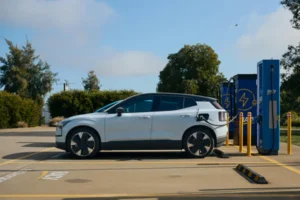
The Big Players: What Legacy Automakers Are Launching
Ford’s EV Offensive
Ford is launching five new EV models in 2026, including the F-150 Lightning Refresh (updated design, improved range), the Mustang Mach-E Gen 2 (redesigned interior, new powertrains), and three new models targeting the mass market. The F-150 Lightning remains the only electric truck with genuine truck capability—towing capacity, payload, and real-world range. Pricing starts at $45,000 for base models, making it competitive with gas trucks when you factor in fuel savings and lower maintenance costs.
General Motors’ Ultium Platform Expansion
GM is rolling out six new Ultium-based EVs in 2026, including the Chevy Equinox EV (starting at $35,000), Cadillac Lyriq refresh, GMC Sierra EV, and three others. The Equinox EV is particularly significant—it’s a practical, affordable family SUV that proves EVs don’t have to be expensive. With 300+ miles of range and a $35,000 starting price, it directly competes with gas SUVs on price and practicality.
Stellantis’s Charger Daytona and Beyond
Stellantis is launching the Charger Daytona (the electric Charger muscle car), updated Pacifica Hybrid (plug-in hybrid minivan), and four other EV models. The Charger Daytona is particularly interesting—it’s a performance EV that proves electric vehicles can be fun and practical simultaneously. With 0-60 times under 3.5 seconds and 300+ miles of range, it’s a genuine alternative to gas performance cars.
Toyota and Lexus’s Hybrid-First Strategy
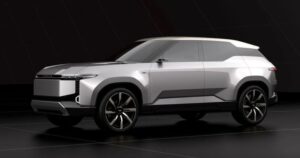
Toyota is taking a measured approach, launching the bZ4X refresh (improved range, lower price), Highlander EV (three-row family SUV), and two other models. Lexus is launching the RZ refresh and three new models. Toyota’s strategy emphasizes hybrid technology alongside pure EVs, recognizing that not all buyers are ready for full electric. The Highlander EV is particularly significant—it’s a three-row family SUV with 300+ miles of range, proving that EVs can handle family road trips.
Honda and Acura’s New Lineup
Honda is launching the e:Ny1 refresh, Prologue refresh, and three new models. Acura is launching the ZDX refresh and two new models. Honda’s focus on affordable, practical EVs means the e:Ny1 (starting around $40,000) is a genuine alternative to gas crossovers. The Prologue, Honda’s luxury EV, competes directly with Tesla Model Y on price and features.
The Affordable Options: EVs Under $40,000
One of the most significant shifts in 2026 is the availability of quality EVs under $40,000. This price point is critical because it’s where EVs become price-competitive with gas vehicles on a total-cost-of-ownership basis, even without federal tax credits.
Chevy Equinox EV ($35,000)
The Equinox EV is the most important EV launch of 2026. It’s a practical family SUV with 300+ miles of range, modern interior, and genuine truck-like practicality. At $35,000, it’s cheaper than most gas SUVs and significantly cheaper than Tesla’s Model Y. This is the EV that proves the technology has matured beyond early adopters.
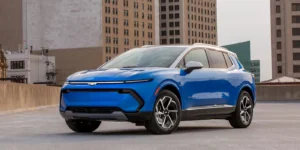
Hyundai IONIQ EARTH SUV ($38,000)
Hyundai’s new IONIQ EARTH is a compact SUV with 300+ miles of range, modern design, and Hyundai’s excellent warranty (10-year/100,000-mile powertrain warranty). At $38,000, it’s a genuine alternative to gas compact SUVs. Hyundai’s focus on reliability and warranty coverage makes this an attractive option for buyers concerned about EV longevity.
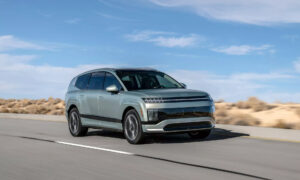
Kia EV9 Refresh ($42,000)
Kia’s three-row EV9 is getting a refresh in 2026 with improved range, updated interior, and lower pricing. At $42,000 for base models, it’s a practical family EV that can seat seven and handle real-world family road trips. The EV9 proves that EVs can be family vehicles, not just commuter cars.
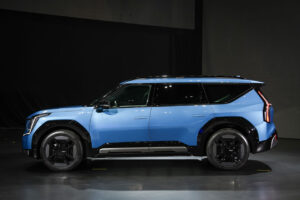
The Performance Options: EVs for Enthusiasts
If you want an EV that’s genuinely fun to drive, 2026 offers several options that prove electric vehicles can be performance vehicles.
Dodge Charger Daytona ($48,000+)
The Charger Daytona is a performance EV that delivers 0-60 times under 3.5 seconds, 300+ miles of range, and a design that looks like a muscle car. It’s proof that EVs don’t have to be boring. At $48,000 for base models, it’s competitive with gas performance cars on price and significantly cheaper on operating costs.
Cadillac Lyriq Refresh ($55,000+)
Cadillac’s luxury EV is getting a refresh with improved range, updated interior, and new powertrains. The Lyriq competes directly with Tesla Model Y on luxury and performance, with the added benefit of Cadillac’s dealer network and warranty support.
Porsche Macan Electric ($60,000+)
Porsche’s electric Macan is a performance SUV that delivers genuine Porsche performance in an electric package. With 0-60 times under 4 seconds and 300+ miles of range, it’s a luxury performance option for buyers who want an EV with genuine performance credentials.
The Practical Options: Family EVs
If you need an EV that can handle family road trips, school runs, and real-world driving, 2026 offers several options designed specifically for families.
Toyota Highlander EV ($52,000+)
The Highlander EV is a three-row family SUV with 300+ miles of range, genuine truck-like practicality, and Toyota’s legendary reliability. It’s proof that EVs can handle family road trips without compromise. At $52,000, it’s competitive with gas Highlanders on price and significantly cheaper on operating costs.
Chrysler Pacifica Hybrid ($48,000+)
The Pacifica Hybrid is a plug-in hybrid minivan that offers 30+ miles of electric range for daily commutes, with gas backup for road trips. It’s the only minivan option in the market, making it the default choice for families who need three rows and genuine practicality.
Volkswagen ID.Buzz ($59,000+)
VW’s retro-inspired electric van is a family vehicle that seats seven and offers 250+ miles of range. It’s a practical alternative to gas minivans and SUVs, with a design that appeals to families who want something different.
The Truck Options: Electric Trucks for Work and Play
Electric trucks are finally becoming practical alternatives to gas trucks, with genuine towing capacity, payload, and real-world range.
Ford F-150 Lightning ($45,000+)
The F-150 Lightning remains the only electric truck with genuine truck capability. With 300+ miles of range, 14,000 lbs of towing capacity, and 3,500 lbs of payload, it’s a genuine alternative to gas F-150s. The 2026 refresh improves range and adds new features.
GMC Sierra EV ($55,000+)
GMC’s electric Sierra is a luxury truck with 300+ miles of range and genuine truck capability. It’s positioned as a premium alternative to the F-150 Lightning, with more luxury features and higher pricing.
Chevrolet Silverado EV ($55,000+)
Chevy’s electric Silverado is a practical truck with 300+ miles of range and genuine truck capability. It’s positioned between the F-150 Lightning and Sierra EV on price and features.
The Luxury Options: Premium EVs for Discerning Buyers
If you want a luxury EV with premium features, 2026 offers several options from established luxury brands.
BMW i5 ($60,000+)
BMW’s electric 5-Series competitor offers 300+ miles of range, premium interior, and genuine BMW performance. It’s a luxury sedan for buyers who want an EV with established brand credentials.
Mercedes-Benz EQE ($65,000+)
Mercedes’ electric E-Class competitor offers 300+ miles of range, premium interior, and genuine Mercedes luxury. It’s a luxury sedan for buyers who prioritize brand prestige and interior quality.
Audi e-tron GT ($100,000+)
Audi’s performance luxury EV offers 0-60 times under 3 seconds, 300+ miles of range, and genuine Audi performance. It’s a luxury performance option for buyers who want an EV with established performance credentials.
The Market Dynamics: Why 2026 Is Different
The 2026 EV market is fundamentally different from previous years because of three factors: (1) Price parity—EVs are now price-competitive with gas vehicles on a total-cost-of-ownership basis, (2) Diversity—there are 30+ models across every vehicle category, and (3) Maturity—EV technology has matured to the point where they’re practical alternatives to gas vehicles, not experimental technology.
This diversity means buyers can choose an EV based on their actual needs—family SUV, performance car, truck, luxury sedan—rather than compromising on practicality to go electric. This is the inflection point where EVs transition from niche market to mainstream market.
Charging Infrastructure: The Missing Piece
The biggest barrier to EV adoption has been charging infrastructure. In 2026, that barrier is largely removed. Over 50,000 public charging stations are now operational across North America, with 150,000+ charging ports. Home charging is increasingly affordable, with Level 2 chargers costing $500-$1,500 installed. This infrastructure maturity means EVs are now practical for most buyers, not just those with dedicated garages.
Total Cost of Ownership: The Real Story
When you factor in fuel costs, maintenance, and federal tax credits, EVs are now cheaper to own than gas vehicles over a five-year period. A Chevy Equinox EV at $35,000 (minus $7,500 federal tax credit = $27,500 net) costs roughly $0.03 per mile to operate, versus $0.10+ per mile for gas vehicles. Over 100,000 miles, that’s $3,000 in operating costs versus $10,000+ for gas vehicles. The math is compelling.
FAQ: Your 2026 EV Questions Answered
Q: Should I wait for 2026 EVs or buy now?
A: If you need a vehicle now, buy. If you can wait until mid-2026, you’ll have more options and potentially better pricing. The 2026 lineup is significantly better than 2025, so waiting is worth considering.
Q: Which 2026 EV should I buy?
A: It depends on your needs. For families: Highlander EV or Pacifica Hybrid. For budget-conscious buyers: Equinox EV or IONIQ EARTH. For performance: Charger Daytona. For luxury: Lyriq or Mercedes EQE. For trucks: F-150 Lightning.
Q: Are EVs reliable?
A: Yes. EVs have fewer moving parts than gas vehicles, which means fewer things to break. Battery technology has matured to the point where 200,000+ mile lifespans are common. Most manufacturers offer 8-10 year/100,000 mile battery warranties.
Q: Can I take an EV on road trips?
A: Yes. With 300+ mile ranges and expanding charging infrastructure, road trips are practical. Plan for 30-minute charging stops every 200-250 miles. It’s slower than gas, but not impractical.
Q: Will EV prices drop further?
A: Possibly, but not dramatically. Battery costs have stabilized, and competition is driving prices down slowly. 2026 pricing is likely close to the floor for the next few years.
The Bottom Line: 2026 Is the Year to Go Electric
If you’ve been waiting for EVs to mature, 2026 is the year. Over 30 new models, price parity with gas vehicles, mature charging infrastructure, and proven reliability mean EVs are now practical alternatives to gas vehicles for most buyers. Whether you need a family SUV, performance car, truck, or luxury sedan, there’s likely an EV that fits your needs and budget. The transition from niche market to mainstream market is happening now, and 2026 is the inflection point.
For more insights on EV buying strategies and market trends, check out our Best Electric SUVs 2026, 2026 EV Launch Radar, and First-Time Car Buyer’s Guide for comprehensive guidance on navigating the 2026 EV market.