
Software-Defined Vehicles 2026: The Future of Car Technology
Introduction
 \n
\nThe automotive industry is undergoing a fundamental transformation. Traditional vehicles, built around hardware-centric architectures, are giving way to software-defined vehicles (SDVs)—cars where software controls nearly every function. In 2026, this shift is no longer theoretical; it’s reshaping how vehicles are designed, manufactured, and updated.
Software-defined vehicles represent a paradigm shift comparable to the transition from mechanical to electronic fuel injection. Instead of dedicated hardware for each function, SDVs use centralized computing platforms that manage everything from engine performance to infotainment through software.
What Are Software-Defined Vehicles?
Traditional vehicles use distributed electronic control units (ECUs)—specialized computers for the engine, transmission, brakes, and steering. These ECUs communicate through proprietary networks and rarely update after purchase.
Software-defined vehicles consolidate these functions into centralized computing platforms featuring high-performance processors, real-time operating systems, middleware layers that abstract hardware from software, over-the-air (OTA) update capability, and multi-layered cybersecurity frameworks.
This architecture allows manufacturers to add features, improve performance, and fix issues through software updates—just like smartphones.
Key Technologies Enabling SDVs
 \n
\n1. Vehicle-to-Everything (V2X) Communication
V2X enables vehicles to communicate with infrastructure, other vehicles, and cloud systems in real-time. Vehicle-to-Vehicle (V2V) communication shares hazard warnings and traffic conditions, Vehicle-to-Infrastructure (V2I) receives traffic signal timing and road alerts, and Vehicle-to-Cloud (V2C) enables diagnostics and software updates.
In 2026, V2X is transitioning from pilot programs to mainstream deployment. Cities like San Francisco, Detroit, and Copenhagen have implemented V2X infrastructure, enabling vehicles to receive real-time traffic information and accident alerts.
2. Sensor Fusion
SDVs integrate data from multiple sensor types—cameras, radar, lidar, ultrasonic, and thermal—into a unified perception system. Advanced algorithms combine these inputs to create comprehensive environmental understanding.
Benefits include redundancy (if one sensor fails, others compensate), improved accuracy (multiple data sources reduce false positives), robustness (works in diverse weather conditions), and efficiency (optimizes computational resources).
3. Edge Computing & AI Processing
Rather than relying solely on cloud processing, SDVs perform critical computations locally on vehicle hardware. This edge computing approach ensures low latency for real-time decision-making, privacy through local data processing, reliability without network connectivity, and bandwidth efficiency.
NVIDIA’s DRIVE platform and Qualcomm’s Snapdragon Ride represent the cutting edge of automotive edge computing in 2026.
Over-the-Air (OTA) Updates: Continuous Improvement
Traditional vehicles receive updates only during scheduled maintenance. SDVs receive updates continuously—sometimes weekly or daily. These updates improve fuel efficiency and performance, add new features and capabilities, fix bugs and security vulnerabilities, enhance autonomous driving capabilities, and optimize battery management in EVs.
A vehicle purchased in 2026 will be significantly more capable in 2027 than it was at purchase—without any hardware changes. For more on vehicle technology evolution, check our guide on AI features and smart tech in cars 2026.
Connected Vehicle Ecosystems
 \n
\nSDVs are nodes in a connected ecosystem that includes smart cities with traffic management systems, cloud services for navigation and diagnostics, other vehicles sharing real-time hazard data, mobile devices for remote access, and home systems for integration with smart home automation.
This connectivity enables use cases impossible with traditional vehicles: predictive maintenance alerts before failures occur, automatic emergency response if the vehicle detects a crash, remote vehicle diagnostics, autonomous valet parking in compatible facilities, and vehicle-to-home (V2H) energy management for EVs.
Cybersecurity in Software-Defined Vehicles
As vehicles become more connected and software-dependent, cybersecurity becomes critical. SDVs address this through secure boot ensuring only authorized software runs, encrypted communication for all vehicle-to-cloud and vehicle-to-vehicle data, intrusion detection systems monitoring for suspicious activity, regular security updates through OTA, and hardware security modules for cryptographic operations.
In 2026, major manufacturers have established bug bounty programs and work with cybersecurity firms to identify and fix vulnerabilities before exploitation.
Benefits of Software-Defined Vehicles
 \n
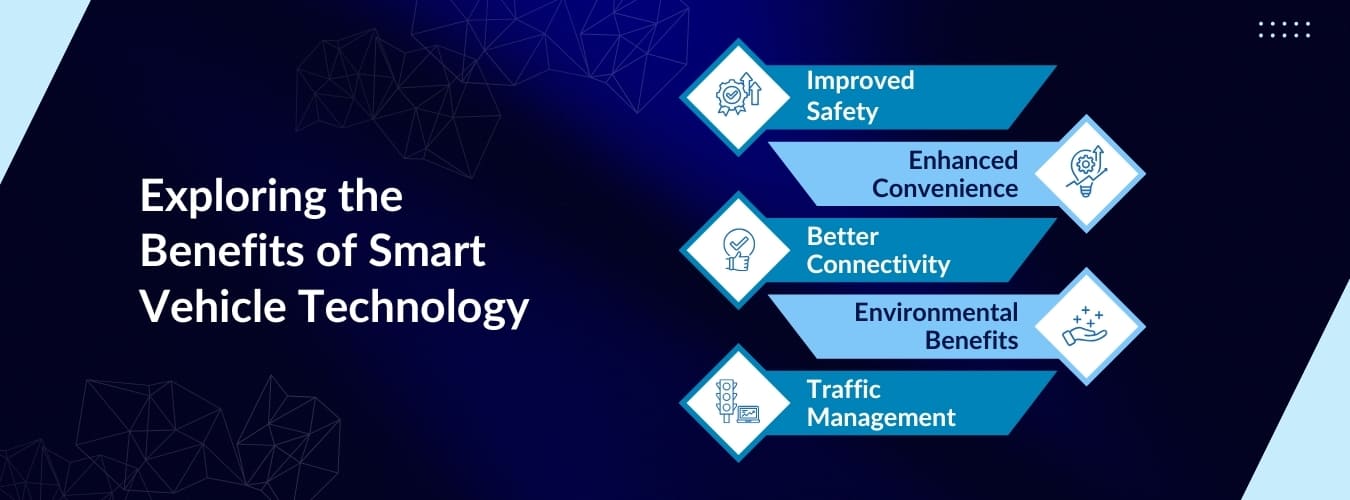
\nFor Consumers: Continuous improvement through software updates, personalization of vehicle behavior and features, lower maintenance due to fewer mechanical components, better resale value as vehicles remain current, and enhanced safety through regular security updates.
For Manufacturers: Faster innovation without hardware redesigns, cost reduction through consolidated hardware, quality improvement through remote issue fixes, data insights understanding vehicle usage, and new revenue streams through subscription services.
For Society: Safer roads through V2X communication, reduced emissions through software optimization, smart cities with intelligent traffic management, improved accessibility for disabled drivers, and more efficient transportation networks.
Challenges & Limitations
Technical challenges include ensuring safety-critical functions execute with guaranteed timing in complex software systems, staying ahead of cybersecurity threats, standardizing platforms across manufacturers, and transitioning from traditional architectures.
Regulatory and privacy concerns involve data privacy compliance with GDPR and emerging automotive privacy laws, right-to-repair questions about vehicle modification, and liability determination when software causes accidents.
Current SDV Leaders in 2026
Premium Segment: Tesla (pioneer in OTA updates), BMW (iDrive 8 and Personal Copilot), Mercedes-Benz (MBUX Hyperscreen and Drive Pilot), and Audi (MMI system with advanced connectivity).
Mass Market: Volkswagen (ID. Buzz and ID. models), Hyundai/Kia (aggressive SDV adoption), and Geely/Volvo (Zeekr and Polestar brands leading in software innovation).
For more on vehicle technology, explore our article on best extended car warranty companies 2026.
The Future of Software-Defined Vehicles
By 2027-2030, expect Level 3 autonomy becoming mainstream, V2X infrastructure deployment accelerating in major cities, standardized platforms reducing fragmentation, AI-powered personalization becoming standard, and vehicle-as-a-service (VaaS) models gaining traction.
Conclusion
Software-defined vehicles represent a fundamental shift in automotive technology. By consolidating functions into software-controlled platforms, manufacturers can innovate faster, improve safety, and create vehicles that improve over time. The software-defined vehicle revolution is here, and 2026 marks the inflection point where this technology transitions from niche to mainstream.
For consumers, this means vehicles that are safer, more capable, and more personalized than ever before. For the industry, it means unprecedented opportunities for innovation and new business models.